
With DIDEAROT entering its final stage, we sat down with David Dumas, Senior Research Engineer and DIDEAROT Project Coordinator, Cenaero, to look back at the project, explore some of its most important achievements and ask what its work could mean for the future of aerospace engineering.

The conversation comes ahead of the DIDEAROT – Horizon Europe Final Project Workshop – which will take place in Brussels on 30 September and 1 October, bringing together experts from industry, research and academia to explore the latest advances in digital engineering for composite aerospace structures.
What was the main engineering challenge you set out to solve with DIDEAROT?
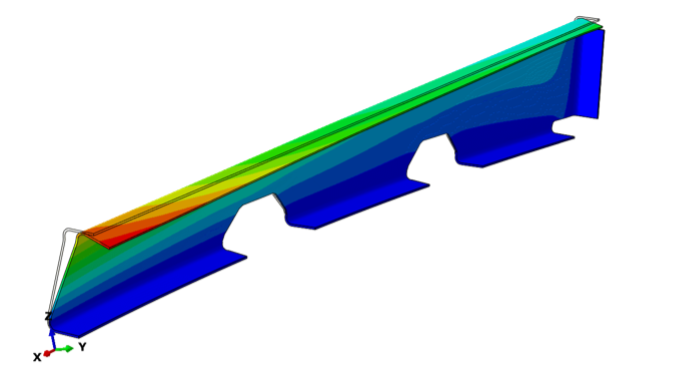
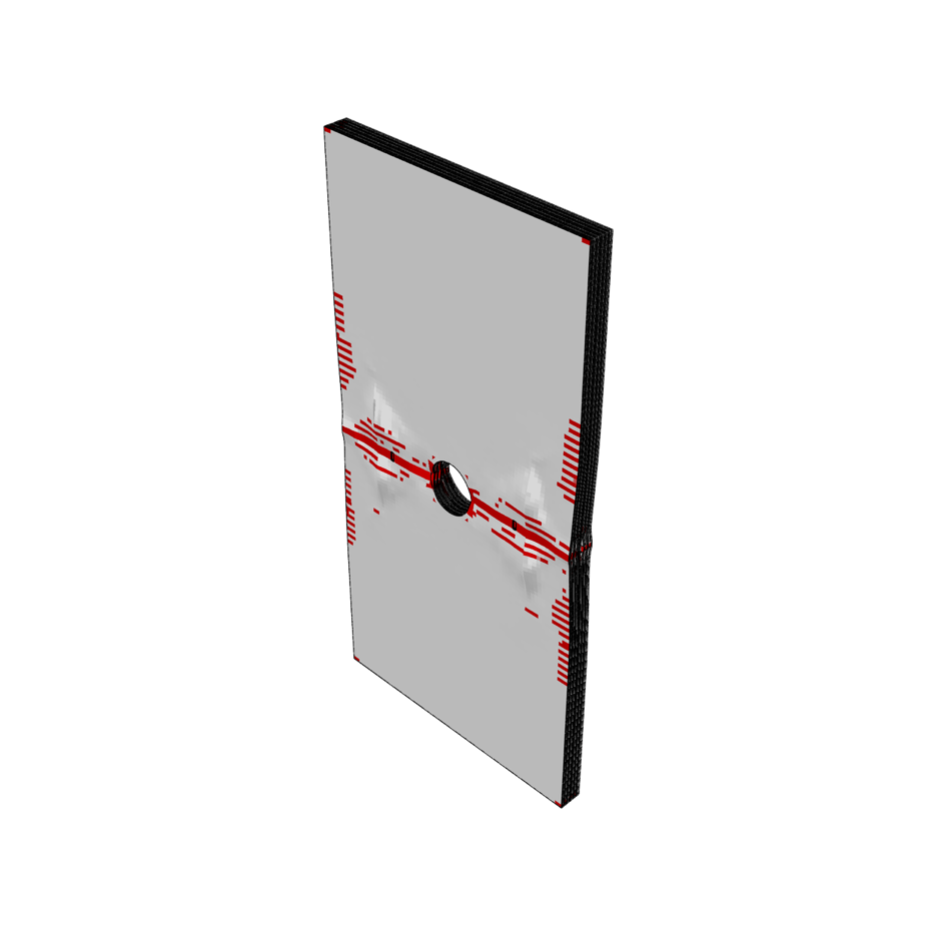
The consortium setup the DIDEAROT project as it was convinced that industrial design practices and certification by analysis could be amplified by improved multi-scale approaches for damage and manufacturing simulations. These are highly computational expensive, and it was necessary to support this with machine learning approaches and improved high-performance computing capabilities.
What makes the approach developed by DIDEAROT different from the way composite structures are designed and tested today?
We want to improve the capability to design with new materials and innovate manufacturing processes without going through the costly and time-consuming process of experimental campaigns. We build the numerical methodologies to try to enable faster experimental validation down the road during final design review stages.
What has surprised you most during the project – and what have you learned that you did not expect at the start?
Challenges always arise to find the best multi-scale approaches to treat the right problem at the right level. Bringing together the thinking potential and “move-forward” attitude of researchers in this project has led to very constructive ideas and initiatives. The level of understanding of what each partner has to bring to the global problem has really surprised me in a good way.
If these technologies are successfully adopted by industry, how could they change the way we design and manufacture aircraft structures?
It’s all about time – cost & critical materials for lightweight structures in aircrafts. Methodologies should allow to think about how to conceptualize and develop and manufacture new composite material configurations, while introducing them faster in the design loop. Engineers should arrive at the experimental testing stage with much more insight on how materials will behave in critical conditions and if they will meet the stringent manufacturing tolerances.
As DIDEAROT comes to an end, what would you like people to take away from the September workshop?
It’s essential at this stage to connect again with other projects and foster ideas for new programmes to maximize return on investment in research made by Europeans. Each Horizon Europe project should be a stepping stone to a more competitive and innovative European industry. I hope we can use the knowledge and data generated in the project to build methodologies for composite aircrafts designs of all types.
[Practical information ] – Final DIDEAROT workshop on 30 September – 1 October ’26 in Brussels.
Over two days, the workshop will bring together experts from industry, research, and academia to explore the latest advances in digital engineering for composite aerospace structures. Discussions will cover topics including:
- Certification by Analysis
- Machine Learning
- Multi-Scale damage analysis
- Robust Manufacturing
Registration: https://pretix.eu/didearot/WS2026/
